 Horowhenua Star
A Levin doctor will hikoi from Kaitaia to the Parliament in an old painted ambulance to bring attention to what he says is a New Zealand health system in crisis.
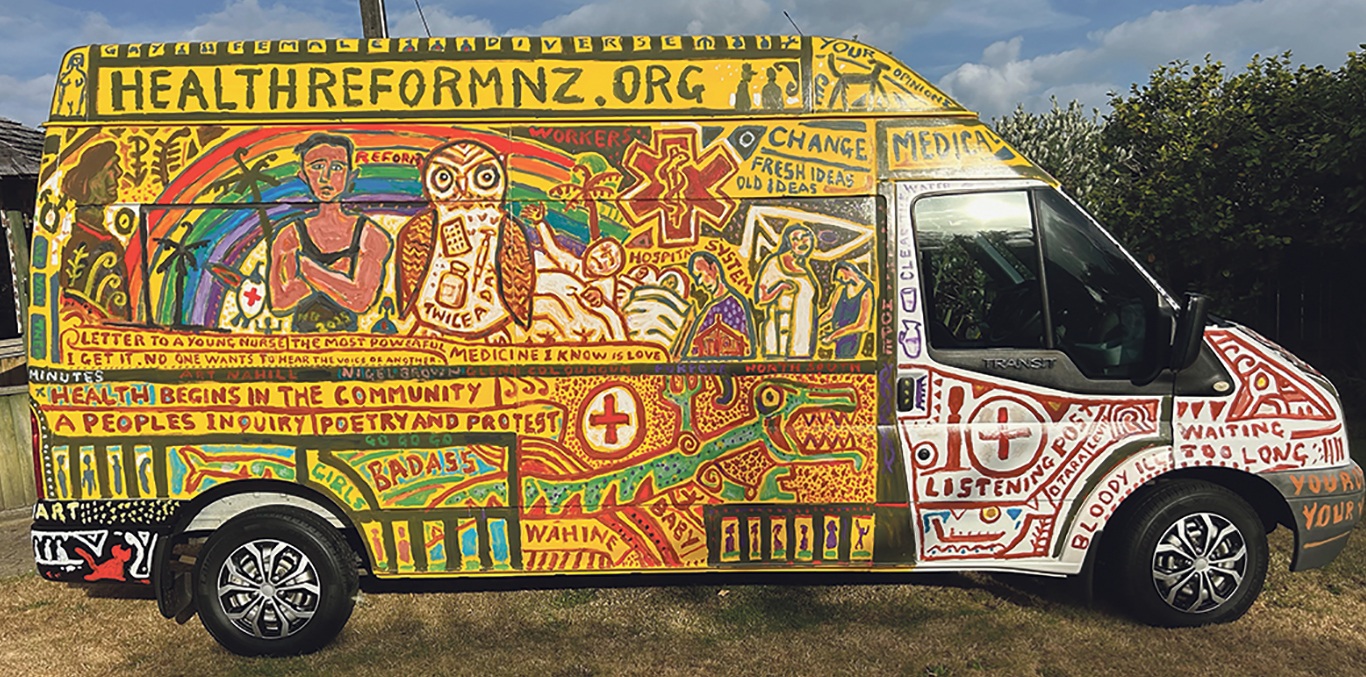
Dr Glenn Colquhoun will be joined on the Hīkoi for Health: A People’s Inquiry by retired Auckland physician Art Nahill, using the symbolism of an ambulance that has a recording studio inside enabling people’s concerns and ideas to be recorded.
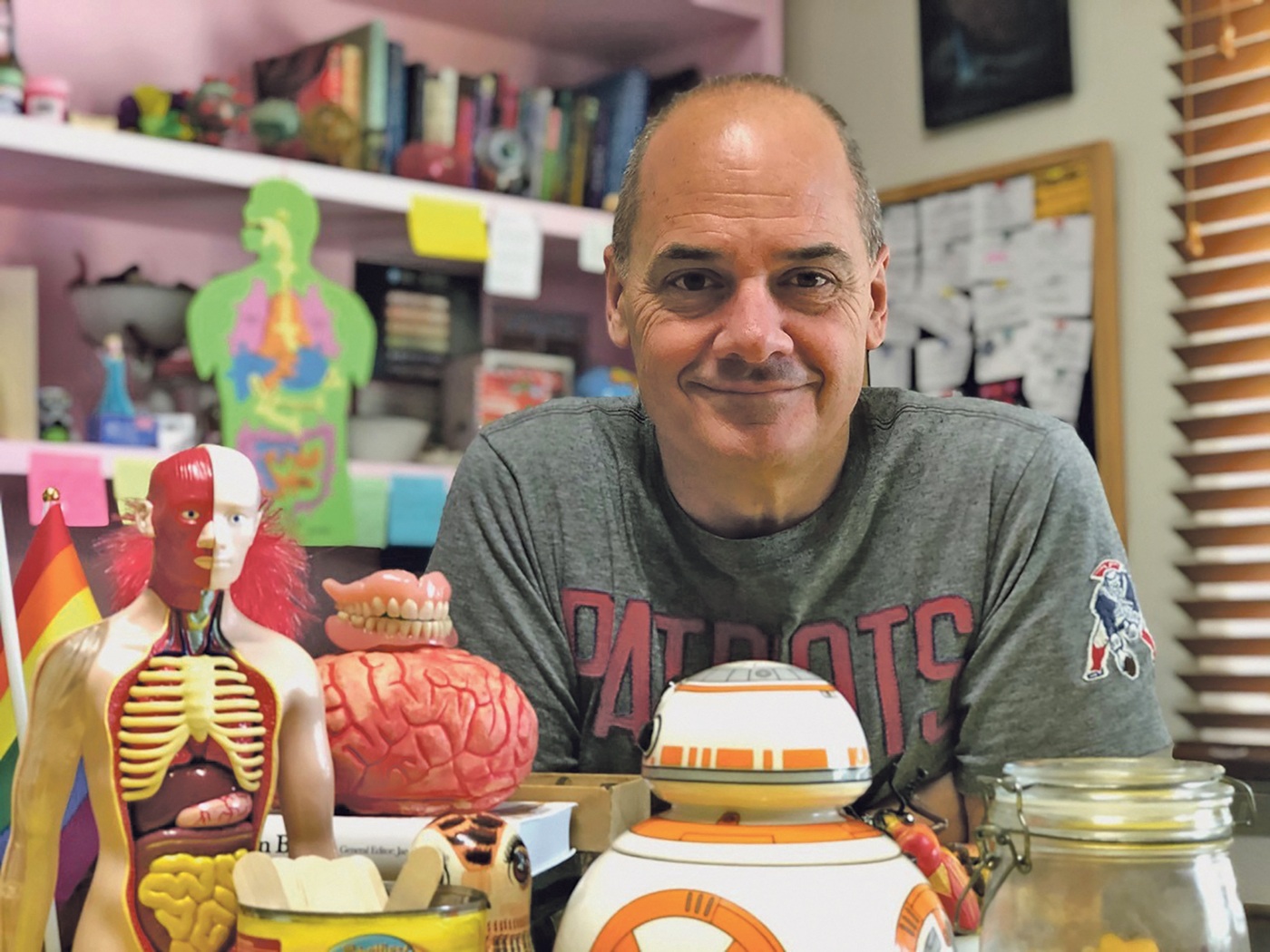
Dr Glenn Colquhoun, who’s taking his concerns about the health system to Parliament.
Photo Paul Williams
The hikoi was born from concern that New Zealand’s health system had been neglected by successive governments, placing unprecedented pressure on emergency departments, resulting in growing waiting lists and difficulty accessing GP care.
“Art and I have talked over the last three or four years about our concerns about the health system,” Glenn says. “Neither of us has seen it so disorientated and struggling so badly in a number of areas.”
He says the situation is urgent. For more than 20 years now there have been warnings of a GP crisis. But it’s worse than predicted, and he fears it will get even worse.
“Those that are at the coal face are colliding with an ageing baby boomer population, Glenn says. “So you have a big glut passing through now as a cohort, and attrition in the GP population. More old people, fewer GPs. That was forecast when I was a young GP.”
He says successive governments have known this and failed to act; “they’ve all been complicit in not doing something”.
“Around the country it’s at a tipping point. It’s got to the point now where this is nuts. This is not good.
“I’m not digging into the current government, but there are plans to fix it the same way it got broken. There is no imagination.
“That’s NZ politics – how do we not achieve what we need to.”
The hikoi kaupapa is to engage communities in a conversation aiming for fundamental reform; “a health system equitable to all New Zealanders, free from political squabbling”.
“Successive governments have used health as a political football. It needs a complete leadership overhaul from the top down. It is being led by people that had long stopped working in the trenches. We need leadership from the bottom up.”
He says efficiencies will come from having the courage to deal with a range of social issues like alcohol availability, smoking, drug and alcohol abuse, obesity, and intergenerational trauma in children and families, housing, income inequality and vaccination rates.
Letting primary care run itself down has been a terrible mistake.
“It’s more important to spend money addressing those things first before building a new hospital,” he says.
Glenn says he and Art are frustrated and angry so there needs to be a vehicle for that.
“We are doctors. We want to fix it, but it’s a system failure.”
“Just to see a doctor now in an expedient way . . . there so many services and is disjointed.”
He says Levin is a prime example, where a new health centre in Liverpool Street was built down the road from an old hospital that was “perfectly functional”. Since then, another one has been built in Power Street, at Tararua Road, and another one is under way in Durham Street.
“They mothballed the old hospital instead of doing it up and now another generation is doing the same thing again,” he says. “We seem to build more and more buildings as a response to not having enough staff. Maybe a new health centre will be great. But how do we all work together?
“I despair that we are not talking to each other. There are gaps in some areas and double ups in others.”
Regions like Levin are being served more and more by short-term locum doctors, a system that leads to poorer health outcomes, as the benefits of a long-term doctor-patient relationships is proven, especially in whānau.
He says a lot of medical professionals end up working overseas for better pay and conditions – and often they don’t come back. Being a GP has also lost a lot of its mana “as we have got more sophisticated and more toys to play with, it’s has become sexier among graduates to get into specialised treatment”.
Glenn says the health system has a mauri (life force).
“Protecting this is at the heart of health. I’m angry that it seems so utterly unappreciated by those who are charged with looking after it. I’m compelled to preserve this mauri,” he says.
He says the health system has never worked for Māori “and there is a huge amount of research showing that”.
Dr Art says the hikoi is not only a protest, but also an opportunity to “shine our passion and ideas so brightly they can’t turn away”.
The hikoi ambulance, painted by artist Nigel Brown, will arrive at The Beehive on May 8.
They’re using symbolism again by asking people to support the kaupapa that day by wearing visible band aids or plasters, calling it Band Aid Day.
They’re also encouraging people to share their health care stories at healthreformnz.org, and plan to speak at the Village Green in Levin on Tuesday, May 6, between 2pm and 4pm.
OTHER STORIES
... loading ...