

 Horowhenua Star
Freshwater gold clams have been found for the first time in Taranaki, raising fears the invasive pest species might get into waterways farther south.
They first appeared in the Waikato region in 2023. Horizons Regional Council environmental manager Craig Davey says the Whanganui River Clam Response Group is already working to stop the small and destructive clams getting into the Horizons region.
“With the weather warming up we know that people will be gearing up to get out on their boats and jet skis and move around the motu,” Craig says. “This is why we are urging people to use the ‘Check, Clean, Dry’ method to ensure they’re not transferring any clams across waterways.”
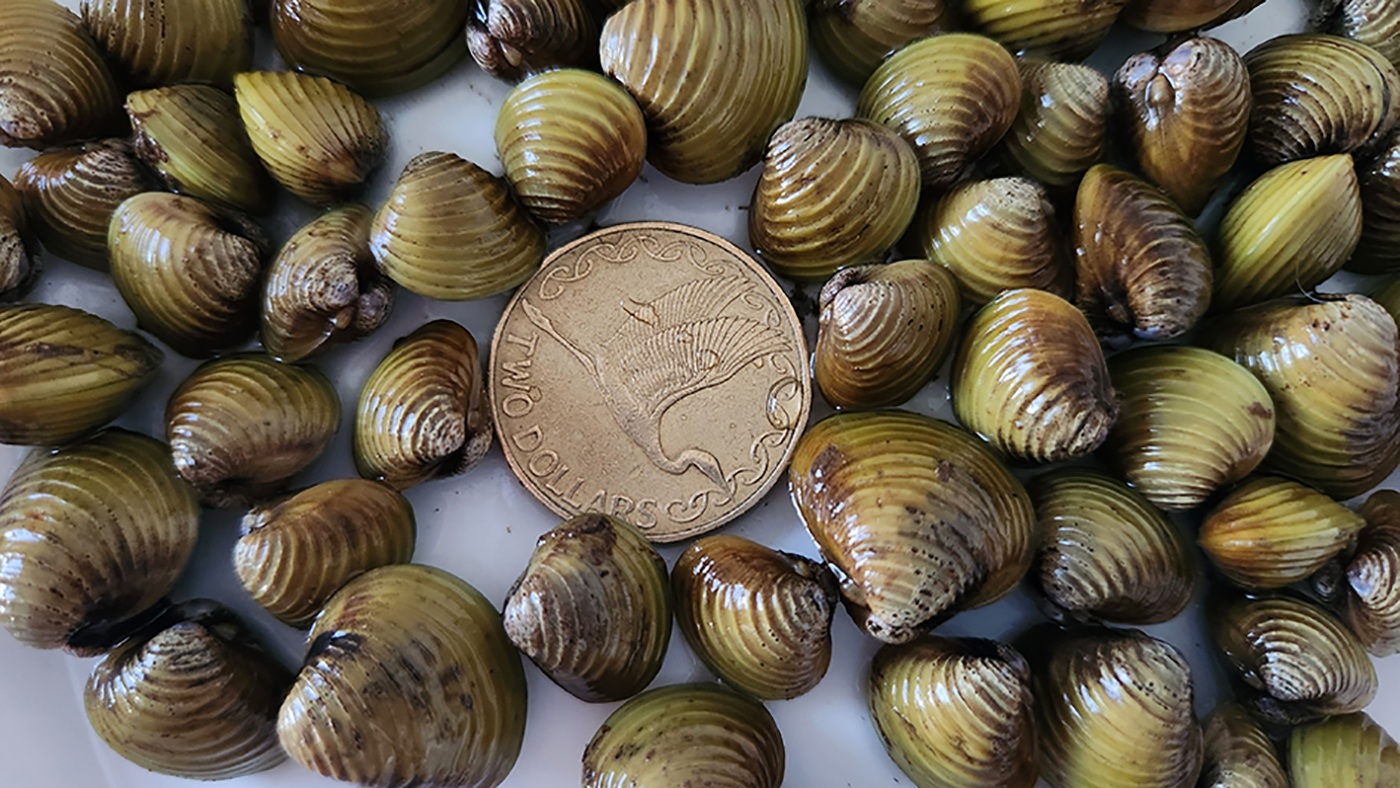
Gold clams (corbicula fluminea) from Waikato River. Photo Tracey Burton, Toitū Te Whenua Land Information NZ
Dispersal by humans is the most likely way gold clams got into Lake Rotomanu at New Plymouth recently, which is why Horizons is stressing the ‘Check, Clean, Dry’ message.
“Check – for what is visible, Clean – for what is not visible, and Dry – to be sure,” he says. “Everything that touches the water, that includes fishing and boating gear and equipment, swimwear, even the dog, needs to be checked, cleaned and dried.”
MPI’s advice for cleaning includes blasting gear and craft with tap water onto grass, and for absorbent materials:
• soak in hot tap water (50-55C) for at least five minutes, or
• soak in 5% bleach solution (5-litre mix = 250ml bleach in 4.75 litres water) for an hour, or
• freeze until solid (overnight), or
• soak in salt solution at 100ppt (parts per thousand) (5-litre mix = 500g salt in 5 litres warm water) for four hours.
It’s also important that both gear and watercraft are dry to touch both inside and out for 48 hours.
Craig says freshwater gold clams are difficult to control and eradication has never been achieved overseas. They reproduce quickly (400 juveniles a day), forming massive populations that can turn river and lake edges into ‘clam pavements’. They also clog water-based infrastructure such as electric generation plants, irrigation systems and other water takes.
The clams (corbicula fluminea), which are native to eastern Asia.
If you see freshwater gold clams, take a photo, call Biosecurity NZ on 0800 80 99 66 or use the online form at report.mpi.govt.nz. And leave the clam alone – don’t move it!
To find out more about freshwater clams and what you can do to stop their spread go to Biosecurity NZ – bit.ly/4nXxY64
OTHER STORIES
... loading ...