
 Horowhenua Star
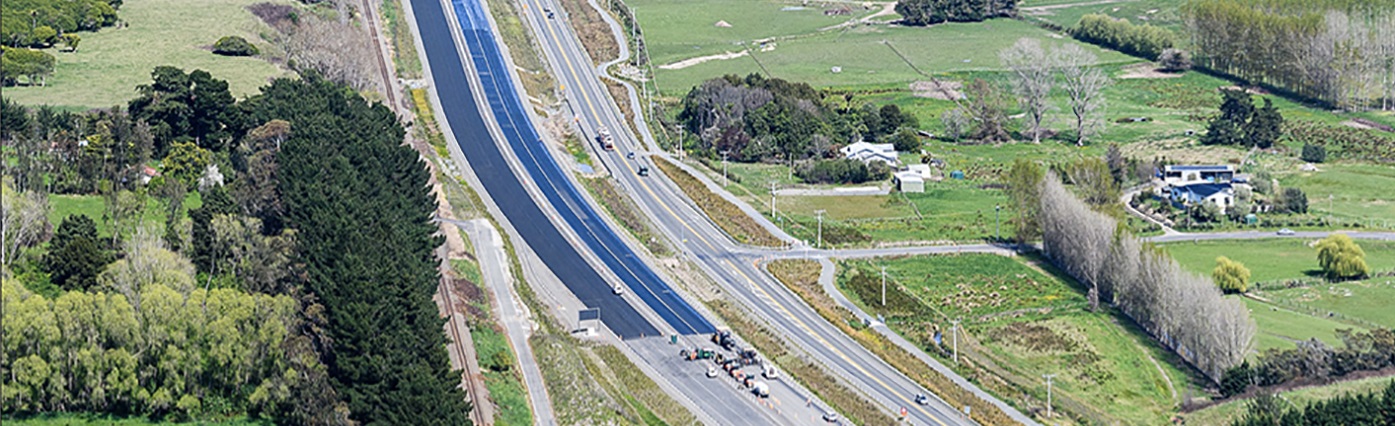
The cost to build the Horowhenua expressway is locked in, says Transport Minister Chris Bishop.
As he helped to turn the first sod at North Manakau Road, the minister said construction costs would not change.
 Horowhenua Star 26 September 2025.jpg)
Prime Minister Christopher Luxon and Horowhenua Mayor Bernie Wanden help turn the first sods for the Horowhenua expressway. Photo Janine Baalbergen
“The contracts have all been signed, so the price tag for this road will not change,” he said.
A recently updated figure to build the officially named Ōtaki to North of Levin (Ō2NL) expressway is $2.1 billion – up 159 percent on the original costings of $810 million.
The minister suggested the previous government and/or NZTA had stuck a “finger in the air” and “used the back of an envelope” to produce the $810m price tag.
When the latest costings were revealed recently, Horowhenua Star asked NZTA Waka Kotahi for comment and a breakdown.
“While construction costs can vary significantly depending on project scale, complexity and regional conditions, the Ōtaki to North of Levin (Ō2NL) project’s pricing remains competitive and reasonable for the outcomes it is set to deliver,” NZTA told the Star. “In addition, the delivery programme has been carefully maintained and independently reviewed and costed to ensure the project remains within budget.”
So, how will the $2.1b be spent?
The biggest price tag – $1.8b – is to get the expressway built. That includes design, construction and all activities needed to complete the road.
NZTA/Waka Kotahi has also spent $278m buying properties that will be in the way of the expressway. Subsequent removal of those properties has cost another $10m.
Construction of the predator-proof area, including planting of riparian zones, wetlands and forest remnants, close to the Queen Street East roundabout has cost $925,000.
Pre-implementation activities for the road, such as soil and geo-technical testing stands at $67m.
The public engagement process also comes at a cost – in this case $560,000.
As a work in progress from this week, when the first sod was turned, flexibility was needed, NZTA said.
“The project is continuing with developing design, procuring services, and establishing supplier
contracts. As this work continues, particularly over the project’s first year, prices will be balanced and confirmed across work packs/categories, which are managed within the overall project budget and contingencies.
“Given this, providing a further breakdown of costs for the project is unhelpful at this stage.”
At Tuesday’s sod-turning, both Chris Bishop and Prime Minister Christopher Luxon referred to the current state highway between Ōtaki and Levin as “dangerous”, “a death trap” and “a goat track”.
“It is therefore important to replace it with a four-lane expressway,” the prime minister said.
Horowhenua Mayor Bernie Wanden was among those at the ceremony. He said the idea of an expressway had been with him since the 1980s.
“This is no doubt the biggest infrastructure project in the region ever,” he said. “It’s not a nice-to-have, it’s a must-have. In the last 40 years the traffic stranglehold has been increasing steadily.”
Representatives of iwi, contractors, and NZTA joined the row of dignitaries turning the first sod.
Muaūpoko representatives led the manuhiri (visitors) into the ceremony, while Nāgti Wehi Wehi, on behalf of Ngāti Raukawau Ki Te Tonga, welcomed them to the site.
OTHER STORIES
... loading ...