
 Horowhenua Star
The only surviving Māori horse racing club in the world is gearing up to stage what has quickly become a highlight in the New Zealand racing calendar.
The annual Matariki meeting at the Ōtaki-Māori Racing Club was first held in 2022 and has grown in popularity since as a chance for the club to celebrate its unique heritage.
ŌMRC general manager Ben Jamison said initially the club had suggested to the sport’s governing body, New Zealand Thoroughbred Racing, that it host a Matariki meeting each season.
“It goes hand in hand with what we stand for,” he said. “It’s good to see the importance of the day recognised and it’s probably our biggest day now. Attendance has tripled in the last three years.”
Club stewards will have a mihi whakatau to start off and explain the day’s significance, with a kapa haka group also performing later in the meeting. There will be hangi and traditional Māori kai stalls operating.
“One particular kupu we focus on at the Ōtaki-Māori Racing Club is manaakitanga – which embodies kindness, generosity, and support. It essentially outlines the process of being kind to people, and they will be kind in return,” Ben says.
The club is unique in that committee members whakapapa to iwi within its rohe, being Ngāti Toa, Ngāti Raukawa and Te Ati Awa. In observing tikanga, it was effectively governed by representation of the three iwi.
There have been other Māori clubs, like the Akura Māori Racing Club (Wairarapa), the Waiomatatini Racing Club (Poverty Bay) and the Turanganui Native Jockey Club (Gisborne), but none has survived beyond the 20th century.
Missionary Samuel Marsden arrived in Aotearoa with the first horses in 1814, a stallion and two mares. By 1911, the estimated horse population was 400,000.
Māori quickly gained reputation as superb horsemen as racing boomed. While the Ōtaki-Māori club officially formed in 1886, race meetings were held well before that, many along the nearby beach or by Katihiku pā south of the Ōtaki River.
The Evening Post in 1890 reported after a New Year meeting at Ōtaki “that the most pretentious racing club in the colony could not have managed a meeting more satisfactorily”.
There were further reports before the turn of that century that the club broke national turnover records and had more tote windows to alleviate queues. There were descriptions of brass bands, Māori cultural groups, picnics, bars and various shops.
The Weekly Press reported in 1898 after a Queen’s Birthday meeting: “The Ōtaki-Māori Racing Club’s hack meeting will be one of the most interesting . . . no wonder it is so popular with the public. The Māori on the West Coast of the North Island have the sporting instinct strong and are among the more enthusiastic patrons of the game. The Ōtaki-Māori conduct their meetings creditably, managing themselves right down to the smallest details, providing their own music . . . the race meetings carried out as they are at Ōtaki have won the admiration of visitors.”
Much of the early Ōtaki-Māori Racing Club history has survived through oral account, although in the early 1990s journalist Alastair Bull wrote a detailed history of the club’s origins from the early days at the beach.
The longevity of the club seems to lie with prudent management, particularly that of first president Hoani Taipua.
Fast forward to today. The club has ambitious plans for a new housing development that would go a long way to ensuring its long-term future, in what is a challenging times for all racing clubs. It recently gained resource consent to build up to 500 residential housing units on mostly vacant land adjacent to the racecourse.
Meanwhile, further enhancing the meeting this year is the inclusion for the first time of the Foxton Racing Club’s flagship race, the $80,000 John Turkington Castletown Stakes.
Foxton Racing Club president Steve Kupa says it represents a desire of local racing clubs – Levin, Foxton and Ōtaki-Māori – to collaborate in an effort to provide support, find efficiencies and combine expertise.
“We still have our own little kingdoms, but it’s about working together for the betterment of racing in Horowhenua.”
The Foxton club hasn’t held a meeting at its course since a fire destroyed its grandstand in 2010. It has been staging its races at Whanganui.
“This is the first time we have had the Castletown Stakes at the Ōtaki-Māori course. It’s great to have the race return to Horowhenua, and we now race the Foxton Cup at Ōtaki, too.”
Ben says the club is only too willing to work with other clubs in the region.
“We can’t operate in our own silos any more and it’s great that we can look to share resources and work collaboratively.”
This year the club is again partnering with the arts, with a Star Glaze exhibition in the Ōtaki Pottery Club’s Tote Modern Gallery directly behind the public stand.
Entry to the course is by koha. The first of nine races is at 11.30am. The last race is at 4.12pm.



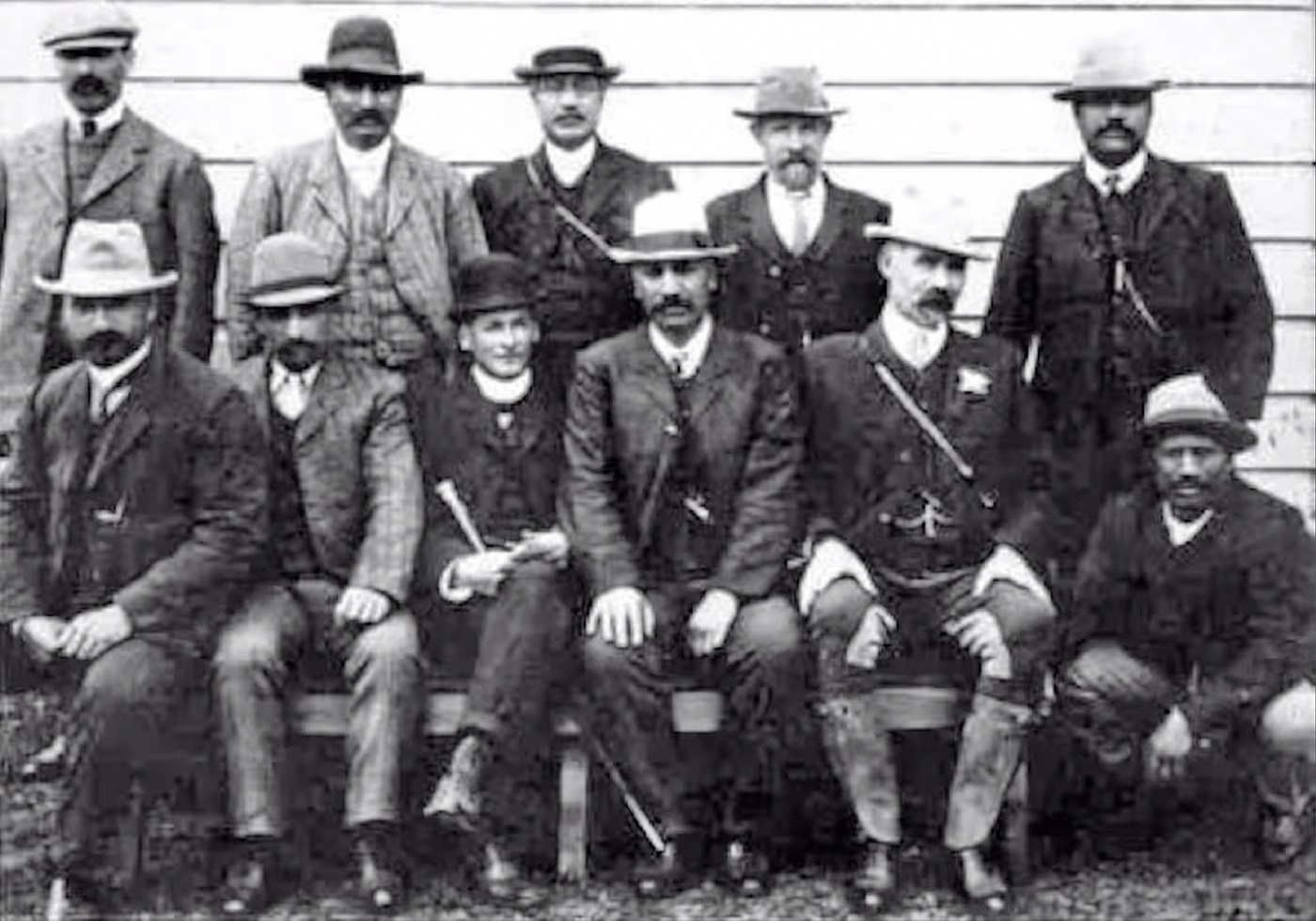
A photograph from the Ōtaki-Māori Racing Club collection featuring stewards and thought to be taken in 1909. Back row, from left: unknown, unknown, Maui Pomare, Mark Ayre and Pitiera Taipua. Front row: Rere Nicholson, Cooper Hawea, Ben Ling, Hema Te Ao, Rod McDonald, unknown.