

 Horowhenua Star
The untapped potential of secondary school cricket for boys and girls in Levin is just one area where the sport could grow in the Horowhenua-Kāpiti region.
It’s a key area of focus identified by Mike Pearson, the new chief executive of the Horowhenua-Kāpiti Cricket Association, as it looks to continue the growth of junior, girls, club, and representative cricket.
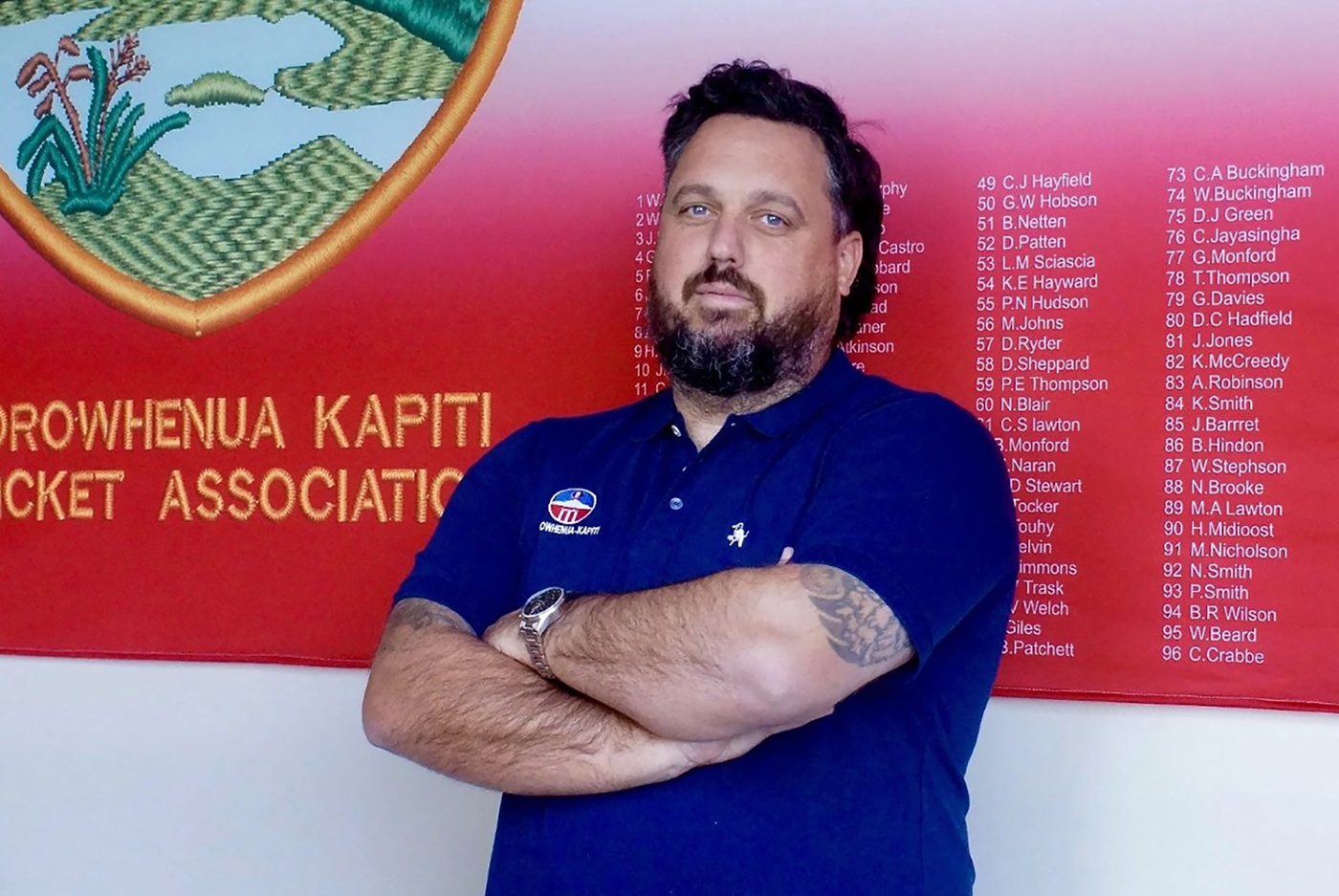
New HKCA chief executive Mike Pearson.
Mike, who has recently taken over from Dave O’Brien, who had the seat for 10 years, says there’s a gap in participation at secondary school level in Levin that needs plugging.
Both Kāpiti and Paraparaumu colleges have several cricket teams, yet at the northern end of the province Horowhenua, Waiopehu and Manawatū colleges have struggled to field teams in recent times.
Mike says the schools could work together to nurture talent. It’s been done before, with huge success. In the 1990s a Combined College team brought together the best players from both Waiopehu and Horowhenua colleges, with an adult filling a player-coach roll within the team.
The approach has the backing of HK’s greatest-ever run scorer, Carl Trask, who as a teenager in the 1990s played for a Combined College team that won the senior club competition in an era that produced some high quality cricket players.
Carl says the team brought together players from the local schools under the Combined College banner, and for a time had future Black Cap Roger Twose as their player-coach.
“It’s funny because I was playing senior club cricket and when the Combined College team was formed I wanted to play for that team – you want to play with your mates,” he says.
Carl, who went on to represent Central Districts, says secondary school cricket provides some of the best years in a cricket career.
“They are your foundation years,” he says.
Mike, who successfully applied for the position at HKCA after five years involved with the Waikanae club, says clubs within Horowhenua-Kāpiti are great at accommodating schoolboy players into their ranks. But they are few and far between, and ideally he would love to see bone fide school competitions for boys and girls grades.
He expects getting secondary school teams will take time to bed in, but there is no better time than now to start implanting new plans.
“It could be that each school has their own team, or we look at a combined team,” he says. “We’re the only province with the Central Districts region that doesn’t have a traditional boy’s boarding school, but that hasn’t been and shouldn’t be a barrier to producing and nurturing great cricket players.”
OTHER STORIES
... loading ...