

 Horowhenua Star
The humble pie is a good example of how squeezed food manufacturers are having to balance increasing supply costs with realistic pricing.
A recent study shows a 2.3% increase in supply charges last month compared with the same period a year earlier, putting pressure on manufacturers and consumers.
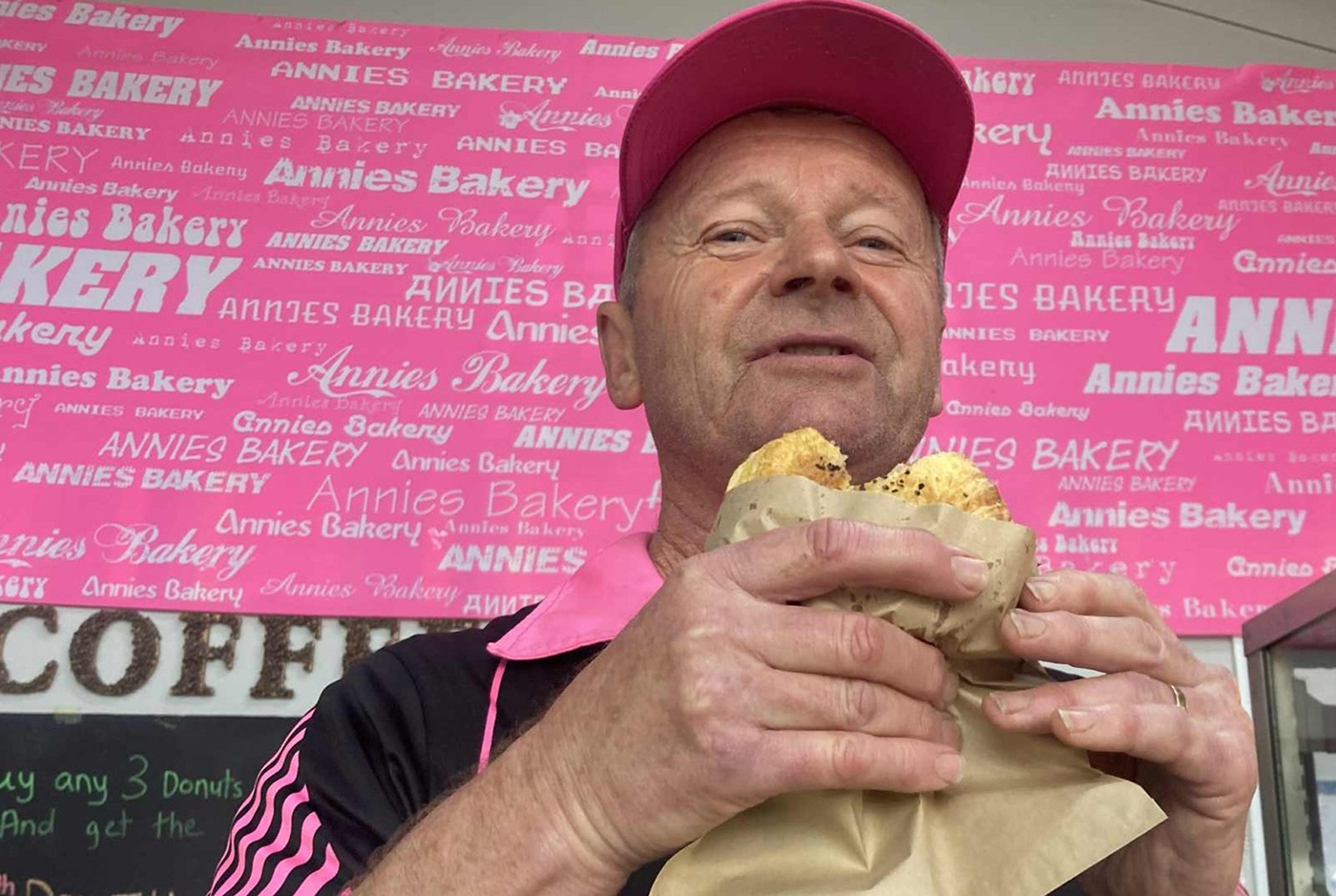
Lui Gundersen of Annies tucks into a pepper steak pie. Photo Paul Williams
Lui Gundersen from Annie’s Bakery in Levin says it forces manufacturers to find efficiencies in production first, like going solar to keep the electricity bill down, rather than hike the price of a pie.
“That’s the last thing you want to do,” he says. He says while butter price rises hog the headlines, increases in the cost of things like meat, cheese, fish, petrol and electricity are all part of the equation.
“Butter is an important taste component but there’s more that goes into making a good pie than just butter,” he says.
“You don’t skimp on taste or quality, so you have to find efficiencies elsewhere. Going solar, for example, has helped keep pricing down.
“Volume can hide price increases, too, so you really need to concentrate on growing your customer base.”
Lui reviews the operation every six months and says being an owner/operator means he can be responsive to trends and adjust accordingly.
“You can be responsive and make improvements,” he says.
The latest Infometrics-Foodstuffs New Zealand Grocery Supplier Cost Index (GSCI) shows supplier costs have continued to rise in that sector.
Infometrics chief executive and principal economist Brad Olsen says the rise is across the board and more than 3200 products increased in cost from August to September 2025.
The GSCI measures the change in the list cost of grocery goods charged by suppliers to the Foodstuffs cooperatives, taking data from more 60,000 products, making it the largest dataset of its type in New Zealand.
Analysis has shown that supplier costs are the major component of supermarket prices, representing two thirds of the on-shelf price.
OTHER STORIES
... loading ...